
ESG Bond Situation in the First Half of 2026: Growth Continues, but Yearly Outlook May Not Accelerate as Much as Last Year (Kasikorn Research Center Infographic)
ESG Bond in the first half of 2026 continues to grow compared to the previous year, but the main driving force comes from certain groups of issuers.
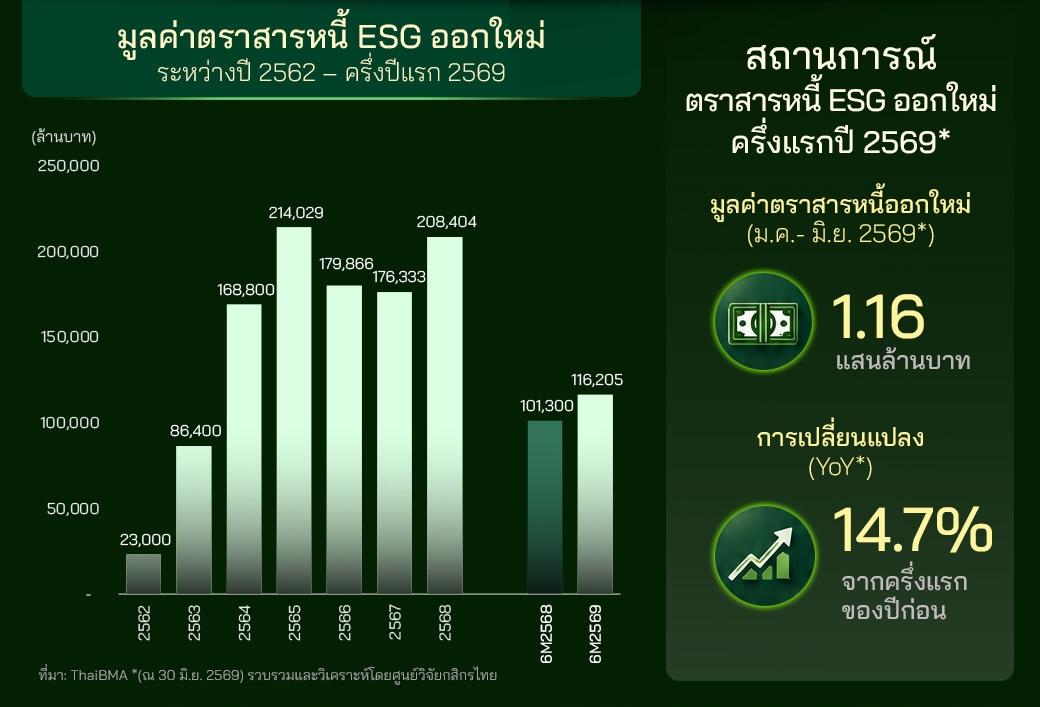
The value of new ESG bonds issued in the first half of 2026 is approximately 116 billion baht, an increase of 14.7% from the same period last year, and higher than the first half of 2025, which was around 101 billion baht. However, the growth in the first half is concentrated in the public sector, specialized financial institutions, and the private sector, particularly in energy and transportation.
The public sector remains the dominant force in the first half of 2026.
When examining the value of ESG bonds issued by sector from January to June 2026, it is found that the public sector accounts for the largest share at approximately 60.8% of the total issuance value, primarily due to bond issuance for debt restructuring from measures to mitigate the impacts of COVID-19 (reopen). This is followed by specialized financial institutions at 17.2%, while the private sector is led by the energy group at 12.0% and transportation at 6.9%. The energy sector mainly raises funds for investments in renewable energy projects, while the transportation sector raises funds for investments in clean energy transportation projects.
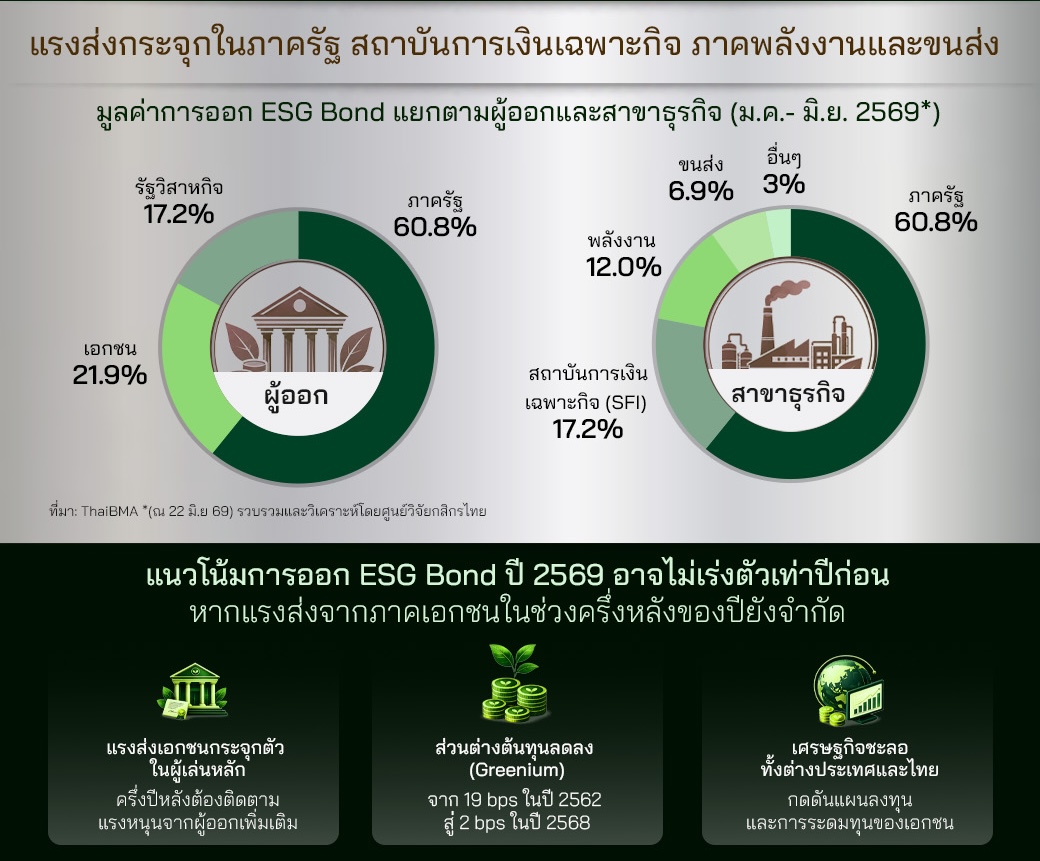
The trend for ESG bond issuance in 2026 may not accelerate as much as last year if the driving force from the private sector in the second half remains limited. Although the first half of 2026 has seen growth compared to the previous year, the overall yearly trend must be closely monitored. This is particularly true if 1) there are no large-scale fundraising efforts from the public sector or major issuers in the second half, especially if the yield on medium to long-term bonds remains high or increases in line with international markets; 2) the cost spread with conventional bonds, or Greenium, narrows. According to data from the Kasikorn Research Center, Greenium in Thailand has narrowed from about 19 basis points in 2019 to just 2 basis points in 2025, reducing the cost incentive for issuing ESG bonds; and 3) economic slowdowns both internationally and domestically may lead the private sector to be cautious about new investments, impacting the demand for fundraising as well.